Writing Review
Food Review in Pakistan (2026 Guide): How to Write Restaurant Reviews + Examples
⏱️ 8 min read•March 31, 2026
Read More →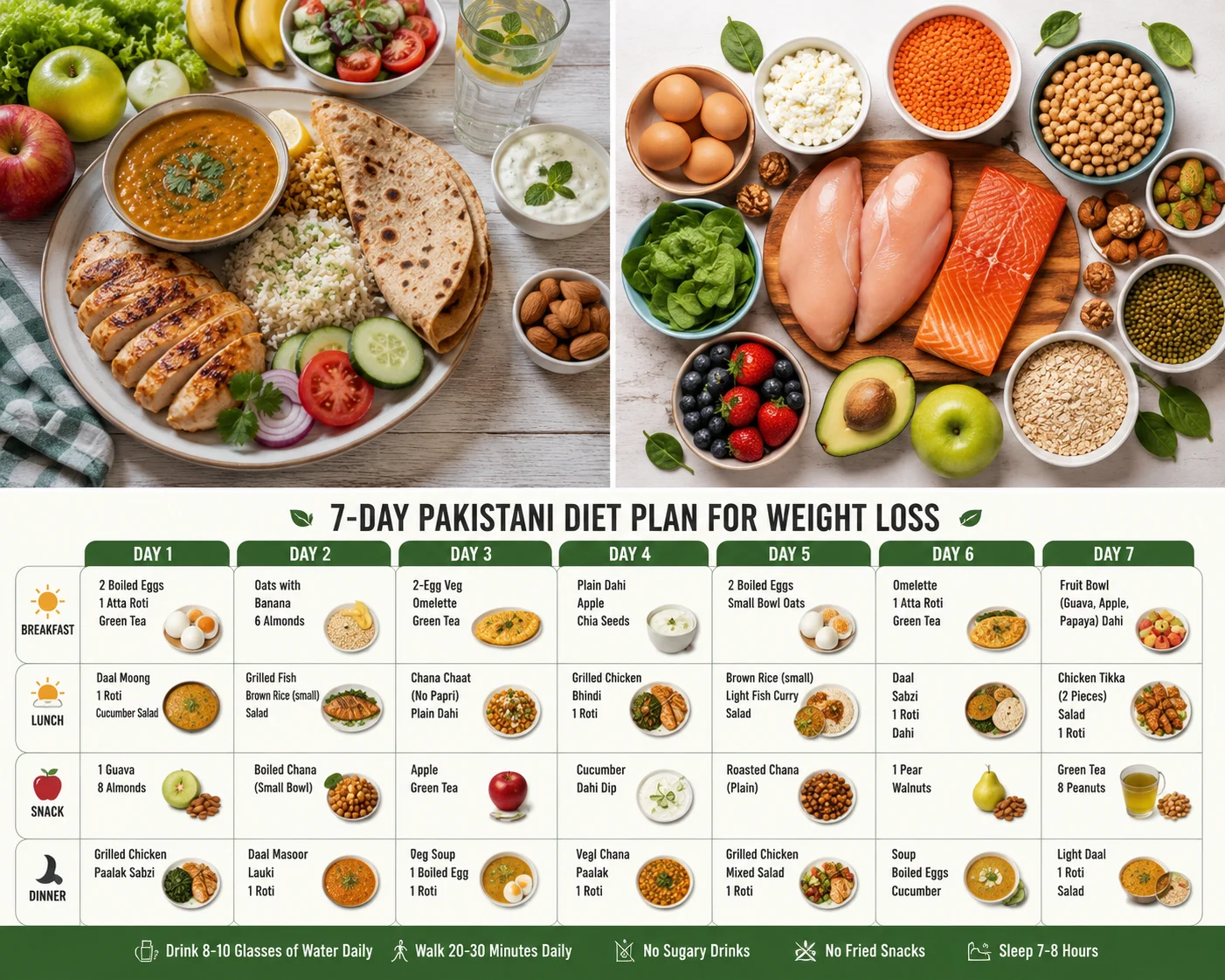
Written by Faizan Mustafa — SEO Specialist at Rabaat | Last updated: 2026
Faizan Mustafa is an SEO Specialist at Rabaat with deep expertise in Pakistan's food, health, and wellness content. He works alongside nutritionists and culinary experts to produce research-backed, culturally relevant guides for Pakistani readers. All dietary information in this article is for general educational purposes only and is not a substitute for personalised medical advice
Healthy diet food for weight loss in Pakistan includes eggs, daal, grilled chicken, fish, chana, yogurt, sabzi, brown roti, oats, and seasonal fruits. The key is a calorie deficit — eating fewer calories than you burn — while keeping protein and fibre high. No magic food. No crash diet. Just smart, consistent choices from your own desi kitchen
If you have been searching for healthy diet food for weight loss in Pakistan, you are not alone. Millions of Pakistanis want to lose weight — but they are also deeply attached to their biryani, chai pe paratha, and meethai at every dawat. The real question is not whether Pakistani food can support weight loss. It absolutely can. The question is: kya hum sahi cheezein choose kar rahe hain?
Whether you cook at home or explore new restaurants, you can discover more options on Rabaat to make smarter food choices.
Whether you cook at home or explore new restaurants, Rabaat is here to help you navigate Pakistan's food scene smartly. Let us get started.
Weight loss happens when your body is in a calorie deficit — burning more energy than it takes in. But the quality of your calories matters just as much as the quantity. The best weight loss foods share four key traits:
Good news: every single one of these properties exists in everyday Pakistani food. Aapko desi khana chorna nahi — sirf sahi cheezein chunni hain.
Use this table to understand the approximate calorie content of everyday Pakistani foods. Knowledge hai toh choices behtar hoti hain.
Calories are approximate and vary by preparation method and portion size. Consult a registered dietitian for a personalised plan.
Protein is the backbone of any effective weight loss diet. It keeps you full for longer, protects muscle mass, and actually burns more calories to digest than carbs or fat. Here are the best protein sources in Pakistan:
Not all carbs are equal. Complex carbs digest slowly, sustain energy, and keep blood sugar stable. In Pakistan, smart carb choices include:
Most vegetables are 20 to 50 calories per cup. You can eat large portions without worrying about calories. Sabzi ko kabhi skip mat karo.
For ideas on where to eat well across Pakistan, explore our guide to hidden restaurants in Pakistan — some of the most interesting healthy spots are ones you have never heard of.
Breakfast sets the tone for your energy, hunger, and food choices for the rest of the day. The best breakfast for weight loss in Pakistan is one that is high in protein, moderate in fibre, and low in refined carbs and sugar.
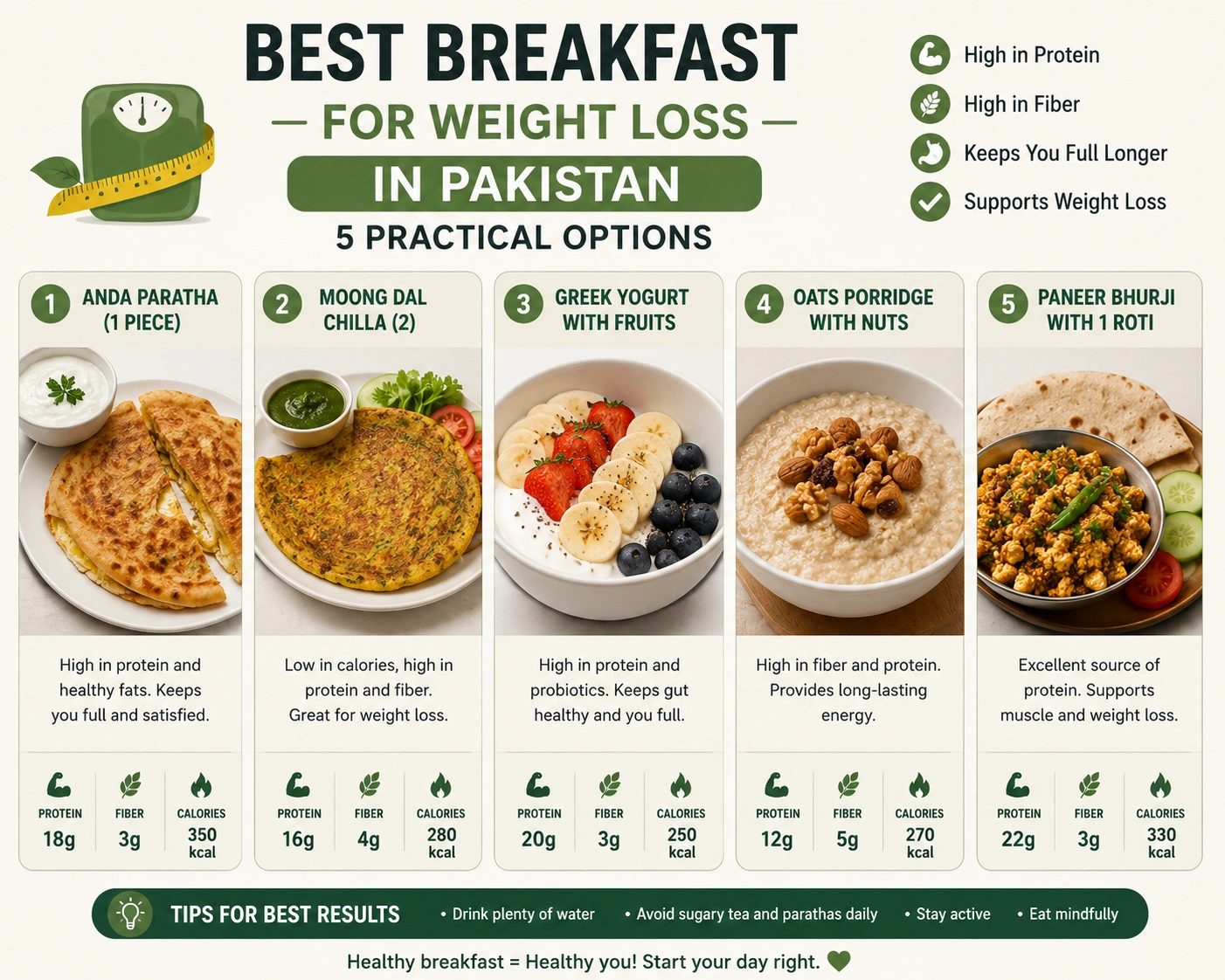
Two boiled eggs, one whole wheat roti, cucumber slices on the side, and green tea. Approximately 350 calories. High protein, adequate fibre, zero added sugar. This is the gold standard breakfast for weight loss in Pakistan.
Half a cup of oats cooked in water or low-fat milk, topped with half a banana and six almonds. Around 300 calories. Slow-digesting and filling through the entire morning.
One cup of unsweetened plain dahi with a guava or apple, and optional chia seeds. Around 200 calories. Probiotic-rich, high fibre, naturally sweet.
Leftover daal from the night before makes a genuinely excellent weight loss breakfast. High protein, high fibre, filling — and it costs almost nothing extra.
Two eggs whisked with onion, tomato, and spinach, cooked in half a teaspoon of oil. Around 250 calories. Protein-dense and satisfying.
Paratha and puri are best reserved for occasional meals — not daily breakfast. They are high in oil and refined carbs that spike blood sugar and trigger hunger within hours.
This plan uses everyday Pakistani ingredients available in any city or town. It creates a moderate calorie deficit without leaving you hungry or nutritionally deficient. Adjust portions based on your body size and activity level.
This is a general guide only. For a personalised plan based on your health conditions, weight, and goals, consult a registered dietitian or nutritionist
If you prefer freshly prepared healthy meals delivered to you, Diet360 is a Pakistani meal service focused on healthy, portion-controlled food. A practical option if you want structured help without cooking everything yourself.
Use the plate method as your guide: half the plate filled with sabzi or salad, a quarter with lean protein, and a quarter with one or two rotis or a small portion of brown rice.
Raat ko heavy meals se bachein. Dinner should always be your lightest meal of the day — lower in carbs and calories than lunch.
Curious about the most loved traditional dishes across Pakistan? Read about famous food in Pakistan — and how to enjoy them more mindfully.
Snacking is not the enemy — mindless, high-calorie snacking is. Here are the seven best healthy snacks for weight loss that are available and affordable across Pakistan:
Samosas, pakoras, chips, biscuits, aur cola — yeh sab weight loss ke sabse bade enemies hain. Ek ek karke reduce karo. Sudden quitting is not needed — gradual substitution is more sustainable.
Fruits contain natural sugars, but their fibre slows absorption and their low calorie density makes them excellent for weight management. Eat the whole fruit — juice removes fibre and spikes blood sugar
Vegetables are the single most powerful tool in your weight loss diet. They are low in calories, high in fibre, vitamins, and minerals. You can eat large amounts without worrying about calorie overload.
Sabzi ko zyada tel mein fry karne ki bajaye halka bhuno ya steam karein. Spices se flavour milta hai — oil se nahi.
These are the most common weight gain triggers in the Pakistani diet. You do not need to eliminate them forever — but consistent overindulgence prevents weight loss.
Haan — diet alone se wazan kam ho sakta hai. Research consistently shows diet accounts for 70 to 80% of weight loss. Exercise speeds up results, improves mood, builds strength, and has major long-term health benefits — but it is not strictly required to lose weight.
If you cannot exercise due to health issues, a demanding schedule, or mobility limitations, focus entirely on what you eat. A consistent calorie deficit through food will produce real results.
That said, even a 20-minute walk after dinner adds up meaningfully over weeks. Pakistan ke parks free hain. Sham ko ek short walk rozana ki aadat daalein — it compounds over months in ways you will feel.
For food inspiration and discovering new dining options, explore the Rabaat blogs for guides, reviews, and healthy food ideas.
Safe, sustainable weight loss is 0.5 to 1 kg per week — approximately 2 to 4 kg per month. In three months, you can realistically expect to lose 6 to 12 kg without crash dieting, muscle loss, or metabolic damage.
Anyone promising you 20 kg in one month is giving you dangerous misinformation. Extreme rapid losses are almost always water weight and muscle mass — not fat. They also trigger metabolic adaptation that makes future weight loss harder.
Aik kilo per hafte ki loss bhi bahut badi baat hair. It compounds. Think of weight loss as a permanent lifestyle upgrade — not a 30-day challenge.
Very low calorie diets (such as 800-calorie plans) should only be followed under direct medical supervision. Do not attempt them independently.
If you are a food enthusiast who loves exploring Pakistani cuisine beyond the diet angle, our Pakistani food lovers guide covers the best food experiences across the country with honest reviews and local insights.
A: Eggs, daal, grilled chicken, fish, chana, brown roti, plain dahi, sabzi, and seasonal fruits like guava and apple. Focus on high protein, high fibre, and minimal fried or sugary food. Consistency with these basics produces real results.
A: Start with a protein-rich breakfast, include sabzi or salad at every meal, choose whole wheat roti over maida, snack on fruit or boiled chana, and drink 8 to 10 glasses of water. Cut sugary drinks and fried snacks consistently.
A: Two boiled eggs with one atta roti, plain dahi, and green tea — approximately 350 calories, high in protein, filling until lunch. Oatmeal with banana and almonds is an excellent alternative for variety.
A: Boiled chana, plain yogurt, fresh guava or apple, a small handful of almonds, cucumber with dahi dip, a hard-boiled egg, or roasted unsalted peanuts. All are low in calories, high in nutrition, and widely available in Pakistan.
A: Spinach (paalak), bottle gourd (lauki), and cucumber (kheera) are the top three — extremely low in calories, high in fibre, and available across Pakistan year-round. Include at least two of these daily.
A: No food specifically targets belly fat. Reduce overall body fat by maintaining a calorie deficit, eating high-protein and high-fibre meals, and eliminating sugary drinks and fried food. Belly fat reduces as overall body fat decreases.
A: Create a calorie deficit entirely through diet — reduce portions, cut fried food and sugary drinks, increase protein and fibre intake, and stay consistent. Diet contributes 70 to 80% of weight loss results even without formal exercise.
A: Not safely. The healthy rate is 2 to 3 kg per month. Attempting 10 kg in one month risks muscle loss, nutrient deficiency, and metabolic damage. Focus on losing 1 kg per week — it compounds to significant results over 3 to 6 months.
A: Switch to brown roti or reduce roti quantity, halve the cooking oil in all sabzi, eat more daal and vegetables, stop sugary drinks, add a daily 20-minute walk, and sleep 7 to 8 hours. These six changes alone produce meaningful weight loss.
A: A very low calorie medical protocol sometimes prescribed by doctors for specific patients. It should never be attempted without direct supervision from a qualified doctor or dietitian, as it can cause serious nutritional deficiencies.
A: Guava (amrood) leads the list — highest fibre, low calorie. Apple, pear, papaya, watermelon, and orange are also excellent. Eat the whole fruit rather than juice to preserve fibre and avoid blood sugar spikes.
A: Make dinner your lightest meal — not a meal to skip. Skipping breakfast often leads to overeating later. Intermittent fasting can work if done carefully, but should not be used as a crash diet substitute.
A: A daily calorie deficit of 300 to 400 calories, combined with high protein and fibre meals, no fried food, no sugary drinks, and 30 minutes of walking five days a week. This is a safe, achievable, and sustainable approach.
Healthy diet food for weight loss in Pakistan means meals rich in protein, fibre, vegetables, fruits, whole grains, and healthy fats — while reducing sugar, fried food, oversized portions, and sugary drinks. Best Pakistani options include eggs, daal, grilled chicken, fish, chana, dahi, sabzi, seasonal fruits, oats, and whole wheat roti. Safe weight loss is 0.5 to 1 kg per week through a moderate calorie deficit. No single food burns fat. Consistency, hydration (8–10 glasses daily), good sleep, and moderate physical activity are equally important for lasting results.
Weight loss Pakistan mein possible hai — without giving up your culture, your food, or your happiness. Daal, sabzi, eggs, brown roti, dahi, fruit — yeh sab pehle se hamare kitchens mein hain. You do not need an expensive gym membership or imported supplements. You need better choices, consistent habits, and a little patience.
Be patient with the process. One week of good eating changes nothing. Six months of good habits change everything. Aik kilo per hafte ki loss — that is all you need to aim for.
Rabaat is here to help you discover the best food experiences across Pakistan — healthy, indulgent, or anywhere in between. Healthy raho, khush raho.
Post food photos on Rabaat and earn reward points redeemable at 500+ restaurants across Pakistan.
Looking for the best restaurants in Pakistan?
Explore our complete guide with ratings, reviews, and hidden gems.